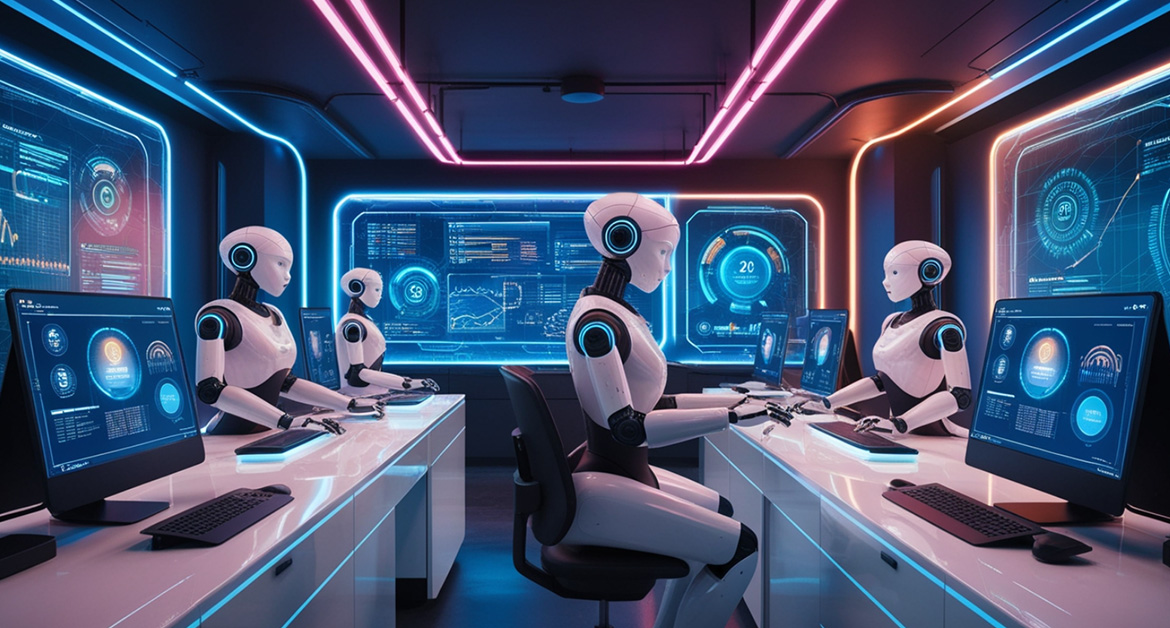
Introduction
For decades, businesses relied heavily on manual processes to manage operations, communication, and decision-making.
However, manual systems are slow, error-prone, and difficult to scale in today’s fast-moving digital world.
Artificial Intelligence is driving a major transformation by replacing manual operations with intelligent automation.
This shift is known as the AI business revolution.
This article explores how businesses are moving from manual operations to intelligent automation systems.
The Shift to Intelligent Systems
AI replaces repetitive manual work with automated, data-driven, and adaptive systems.
AI systems support:
- Automated workflows
- Real-time decision-making
- Predictive analytics
- Smart task management
- Process optimization
- Error reduction
- Customer automation
- Business intelligence systems
Automation Over Manual Work
AI eliminates repetitive manual tasks across all departments.
Data-Driven Decisions
Businesses rely on real-time insights instead of guesswork.
Scalable Systems
Operations grow without proportional increases in workload.
Problems with Manual Operations
- Slow execution of tasks
- Human errors
- High operational costs
- Lack of scalability
- Inefficient communication
How AI Transforms Business Operations
AI automates core business processes and introduces intelligence into everyday operations.
- Workflow automation
- Smart decision systems
- Real-time monitoring
- Predictive planning
- Automated reporting
Business Benefits
- Higher efficiency
- Lower costs
- Better accuracy
- Faster growth
- Improved competitiveness
Real-World Impact
Companies transitioning to AI-powered systems experience faster operations and improved decision-making.
After implementation:
- Manual workload decreased
- Efficiency increased
- Costs reduced
- Productivity improved
Best Practices
- Start with core automation processes
- Integrate AI across departments
- Use real-time analytics tools
- Continuously optimize systems
The Future of Business Operations
Future businesses will operate almost entirely on intelligent automation systems with minimal manual intervention.
Conclusion
The shift from manual operations to AI automation is reshaping the business world.
Companies that adopt AI early gain a major advantage in speed, efficiency, and scalability.
Ultimately, this revolution marks the beginning of fully intelligent business ecosystems.