Introduction
Reporting is a critical part of every business operation. It helps organizations track performance, monitor growth, and make informed decisions.
However, traditional reporting systems often rely on manual data collection, spreadsheets, and delayed updates, which reduce efficiency and accuracy.
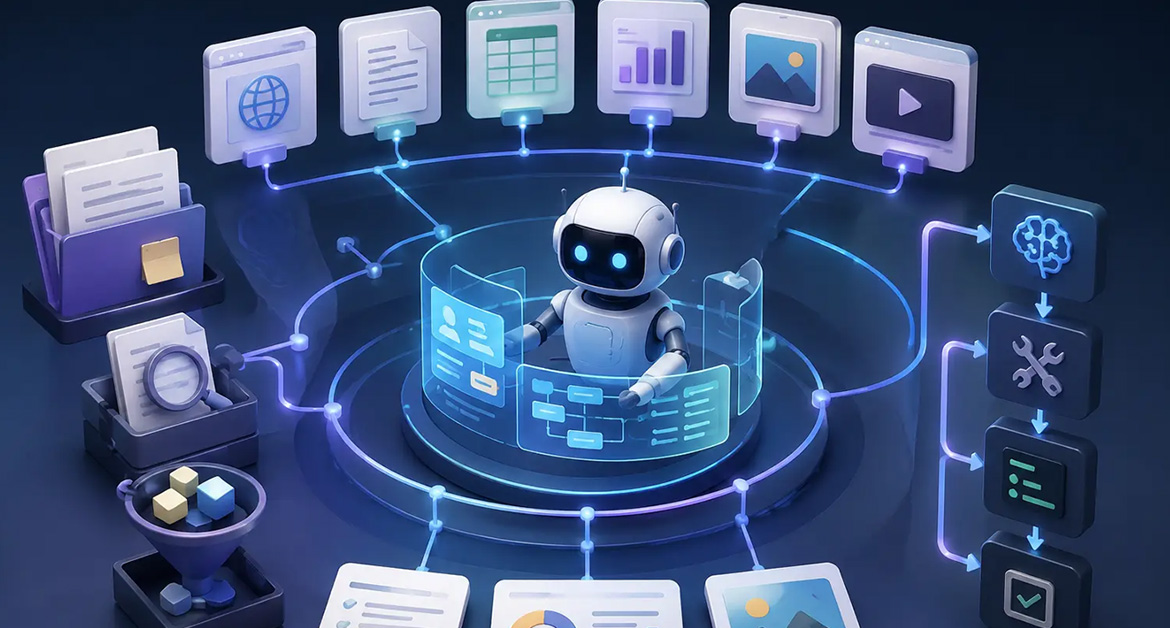
Artificial Intelligence is transforming reporting systems by automating data collection, analysis, and visualization in real time.
AI-powered reporting tools allow businesses to access instant insights without manual effort.
This article explains why businesses should automate their reporting systems using AI.
The Role of AI in Reporting
AI transforms reporting by continuously collecting data, analyzing patterns, and generating real-time dashboards automatically.
AI reporting systems support:
- Real-time dashboards
- Automated data collection
- Predictive analytics
- Error detection in data
- Custom report generation
- Performance tracking
- Business intelligence insights
- Data visualization automation
Real-Time Insights
Businesses get instant access to updated performance data.
Higher Accuracy
AI reduces human errors in reporting and data entry.
Time Efficiency
Automated reporting eliminates manual spreadsheet work.
Problems with Manual Reporting
Traditional reporting systems are slow and inefficient.
- Time-consuming data entry
- Delayed insights
- Human errors
- Disconnected data sources
- Limited scalability
AI-Powered Reporting Systems
AI automates the entire reporting pipeline from data collection to visualization.
It enables:
- Automated KPI tracking
- Live dashboard updates
- Data aggregation from multiple sources
- Anomaly detection
- Predictive reporting
Improving Decision-Making
AI reporting helps managers and executives make faster and more informed decisions.
Benefits include:
- Faster strategic planning
- Data-driven decisions
- Reduced guesswork
- Improved forecasting accuracy
Cost Reduction Benefits
Automated reporting reduces the need for large data teams and manual analysis.
- Lower operational costs
- Reduced labor dependency
- Faster reporting cycles
Real-World Impact
A company using manual reporting faced delays and inconsistent data across departments.
After adopting AI reporting tools:
- Reports became real-time
- Accuracy improved significantly
- Decision-making became faster
- Teams saved hours of manual work
Best Practices
- Centralize all business data
- Automate KPI tracking
- Use cloud-based analytics tools
- Regularly validate AI outputs
The Future of Reporting
Future reporting systems will be fully autonomous, generating insights, predictions, and recommendations without human input.
Conclusion
AI is revolutionizing business reporting by making it faster, more accurate, and fully automated.
Manual reporting systems are becoming outdated due to inefficiency and delays.
Businesses that adopt AI reporting gain real-time insights, improved decision-making, and significant cost savings.
Ultimately, AI-powered reporting is becoming essential for modern data-driven organizations.